Great Canadian Architects since 1800: Thomas Fuller
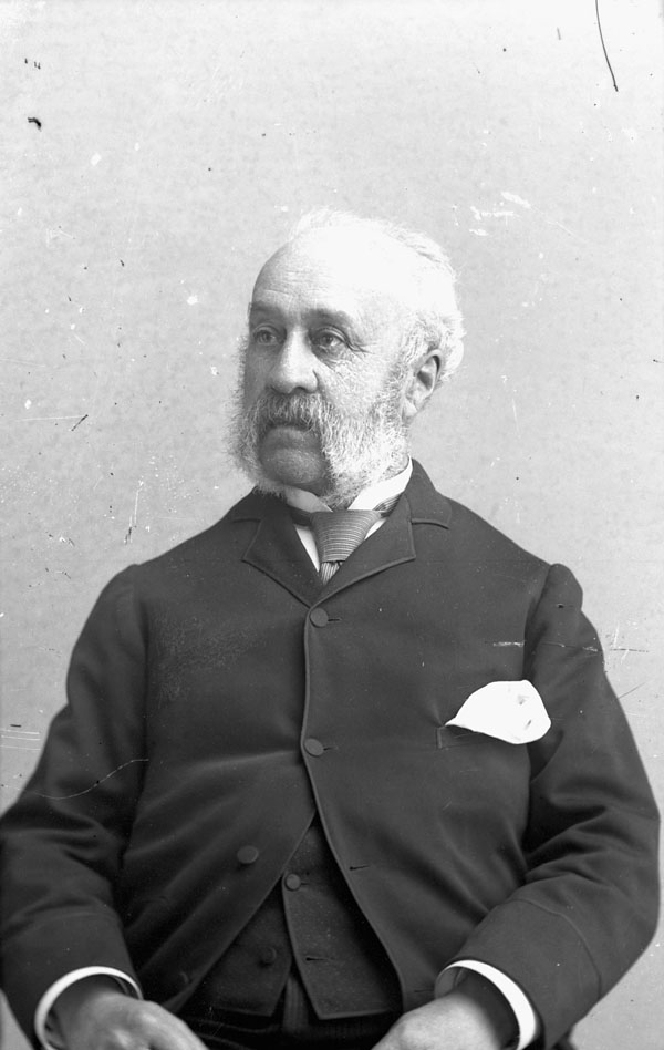
On 6 June 2016, the architect Thomas Fuller was designated a
National Historic Person.
Is there one of his buildings near you?
If you're looking through the Canadian Register of Historic
Places (CRHP) the chances are that you're already interested in
Canada's built environment. You might be surprised how many
buildings on the CRHP database were designed by some of Canada's
greatest architects. One architect whose architectural designs and
prolific output proved influential in the field of Canadian
Architecture was Thomas Fuller, Chief Architect to the Department
of Public Works (DPW) 1881-1896 a period often referred to as the
golden age of federal architecture in Canada. Fuller's main
works are available on both the CRHP and the Dictionary of Architects in Canada where Robert
Hill has made his Biographical Dictionary of Architects in Canada
1800-1950 available online.
After 1867, the newly created Dominion Government was
responsible for creating and maintaining its own public buildings
and so a public works department was formed to take this in hand.
In 1871, the Engineering Branch of the DPW was enlarged to include
an Architect's Branch. This eventually became the Chief Architect's
Office. Thomas Seaton Scott (1826-95), the first Chief Dominion
Architect, was succeeded by Thomas Fuller (1823-98).
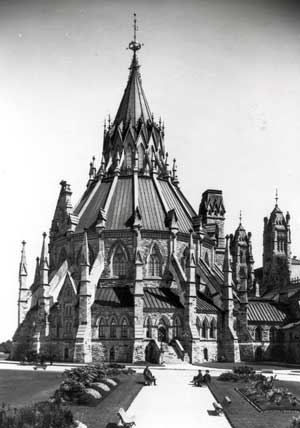 Fuller instilled a high level of
professionalism and the consistent production of high quality
buildings soon established the department`s position within the
Canadian federal bureaucracy. Already with an international
reputation, Fuller left England in 1857 to set up practice in
Toronto with Chilion Jones. With Fuller as designer their firm won
two important competitions, the Parliament Buildings in Ottawa in
1859, and the New York State Capitol in Albany in 1867.
Fuller instilled a high level of
professionalism and the consistent production of high quality
buildings soon established the department`s position within the
Canadian federal bureaucracy. Already with an international
reputation, Fuller left England in 1857 to set up practice in
Toronto with Chilion Jones. With Fuller as designer their firm won
two important competitions, the Parliament Buildings in Ottawa in
1859, and the New York State Capitol in Albany in 1867.
In 1881, Sir Hector-Louis Langevin, Minister of Public Works
appointed Fuller Dominion Chief Architect. Langevin wanted high
design standards and to create an imposing government presence
across the country. During Fuller`s tenure the department expanded,
increasing output to cope with events such as the opening of the
Prairies and other government initiatives. A small department in
1881, the Chief Architect's Branch soon grew producing a large,
innovative body of work. By the late 1880s, however, budgetary
cutbacks led to more economic designs and standardization.
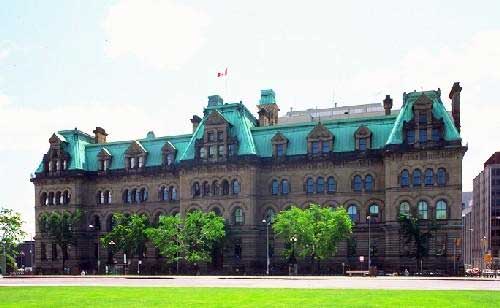 Although responsible for buildings such as the
Langevin Block, an early, expensive project, Fuller's department
also excelled in the design of small to medium sized public
buildings tailored to individual sites, perhaps best seen in the
smaller individually designed post offices. Now cherished community
landmarks these picturesque structures, sometimes asymmetrically
designed, often feature a blend of Gothic and Romanesque details,
stone gables, and corner positioned clock towers.
Although responsible for buildings such as the
Langevin Block, an early, expensive project, Fuller's department
also excelled in the design of small to medium sized public
buildings tailored to individual sites, perhaps best seen in the
smaller individually designed post offices. Now cherished community
landmarks these picturesque structures, sometimes asymmetrically
designed, often feature a blend of Gothic and Romanesque details,
stone gables, and corner positioned clock towers.
Public Works had a huge impact on the built environment in
Canada. Chief Architect until 1896, Fuller's tenure witnessed the
construction of approximately 140 buildings nationwide, of these
approximately 78 were federal buildings and post offices. These
buildings created and consolidated a federal government presence
across Canada. 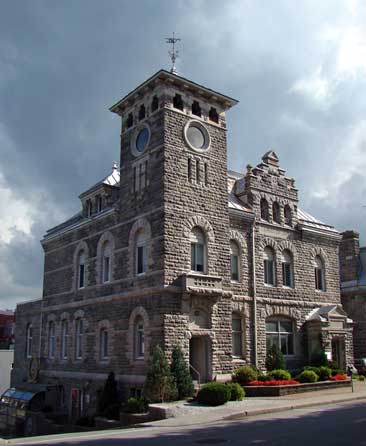
Changes in architectural styles in federal architecture are
reflective of stylistic changes in Canadian Architecture as a
whole. Fuller's work for the federal government reflected the
picturesque eclecticism of the period. This free and eclectic use
of Gothic, Romanesque, Flemish, British vernacular, and classical
elements is most apparent in his early buildings.
Fuller's period of tenure occurred at a time when the
architectural profession was becoming more developed, when new
materials, technologies and engineering methods were becoming
widely available, and when architects were creative
stylistically.
Under Fuller's 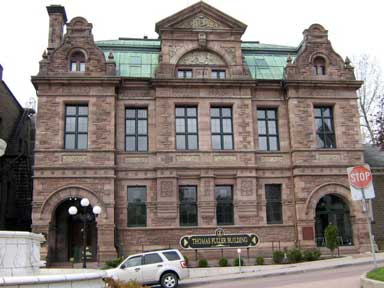 tenure the DPW delivered attractive,
well-designed buildings in a short time period and usually within
budget. His work is distinguished by its excellent site use,
contrasting surfaces, love of texture, attention to detail, and
good craftsmanship and materials. Under Fuller's direction the DPW
consolidated its facilities for in-house design and construction
supervision. The government of the day successfully extended its
federal presence through services to smaller communities. This
resulted in a series of well constructed post offices in towns and
cities across Canada.
tenure the DPW delivered attractive,
well-designed buildings in a short time period and usually within
budget. His work is distinguished by its excellent site use,
contrasting surfaces, love of texture, attention to detail, and
good craftsmanship and materials. Under Fuller's direction the DPW
consolidated its facilities for in-house design and construction
supervision. The government of the day successfully extended its
federal presence through services to smaller communities. This
resulted in a series of well constructed post offices in towns and
cities across Canada.
Thomas Fuller died in Ottawa in 1898 and is buried in Beechwood
Cemetery, which was designated a National Historic Site of Canada
in 2002.
In 2016, Thomas Fuller was designated a National Historic
Person.